Flower Farm Pricing: The Small Shift That Can Increase Your Profit
There is a moment on a flower farm when “just sell more” starts to feel a little bit impossible. The cooler is full, the buckets are lined up, your hands are sticky from harvest, and somehow the profit still does not feel like enough. You look around and think,
“Do I need more customers? More flowers? More markets? More marketing?”
And yes, marketing and sales matter. They absolutely matter. But if you are a few years into your flower farming business and you already have meaningful revenue, the fastest way to increase flower farm profit may not be growing more flowers at all...
It may be looking at your flower farm pricing.
When your margins are tight and your season already feels full, pricing can become one of the most powerful tools in your business. A small price increase on bouquets, bunches, CSA shares, or floral services can create more profit without asking you to harvest more, bunch more, deliver more, or stretch your body any thinner than it already is.
Why Flower Farm Pricing Matters So Much
There are really only a few ways to grow a flower farming business. You can get more customers. You can get your current customers to buy more often. Or you can increase your prices. Most flower farmers naturally reach for the first two because they feel productive and familiar. More customers feel like growth. More sales feel like proof that the business is working.
But more sales usually come with more work. If you sell 20% more bouquets, you also have to grow, harvest, process, bunch, sleeve, transport, and sell 20% more bouquets.
That means more labor, more supplies, more pressure on your systems, and often more exhaustion.
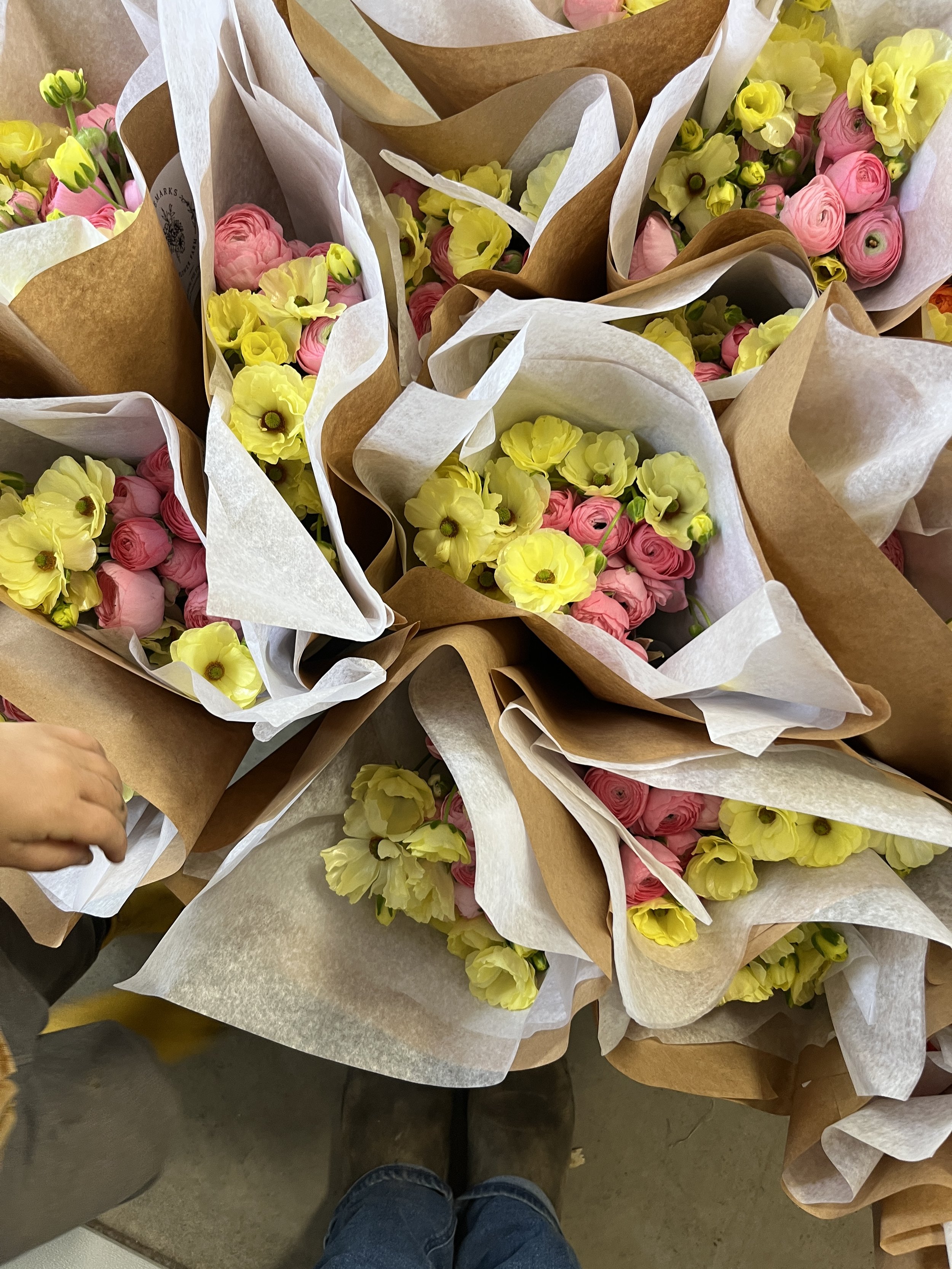
Flower farm pricing works differently. When you raise the price of a bouquet from $20 to $24, you are not automatically adding more stems to the field or more hours to your harvest day. You are improving the margin on something you are already selling. That is why pricing flowers for profit can be such a high-leverage move for a small flower farm.
Let’s say you sell 100 bouquets at $20 each. That is $2,000 in revenue. If your costs are around 50%, your profit is about $1,000. If you get 20% more customers, you might sell 120 bouquets and bring in $2,400, but your costs rise because you are making more product. Your profit might land around $1,200.
Now imagine you sell the same 100 bouquets, but raise the price from $20 to $24. Your revenue is still $2,400, but your costs do not rise in the same way because you are not making more bouquets. Your profit could be closer to $1,400.
Same customers. Same flowers. Same harvest. A VERY different bottom line.
Small Price Increases Can Create Big Flower Farm Profit
This is where cut flower pricing starts to get really eye-opening. A $1 increase might not feel like much when you are standing at the market table. A $5 increase on a mixed bouquet might feel scary when you write it on the board. But across a full growing season, those small changes multiply quickly.
If you sell 1,500 bouquets over a 20-week season and add just $5 to your mixed bouquet price, that is $7,500 in additional profit. Not from adding another acre. Not from building another tunnel. Not from hiring another employee. Just from adjusting the price on flowers you are already growing, harvesting, and selling.
That kind of profit can change the feel of an entire season. It could help pay for a flower cooler, irrigation supplies, part of a greenhouse, better tools, or just the ability to actually pay yourself. And for many flower farmers, that is the real difference between a business that keeps draining them and a profitable flower farm that can actually support them.
This does not mean raising flower prices carelessly. It does not mean price gouging or suddenly doubling everything overnight. It means taking an honest look at where your pricing is too low, where your margins are getting squeezed, and where your farm business has outgrown prices you set when you were just trying to get started.
Why Flower Farmers Avoid Raising Prices
A lot of flower farmers already know their prices are too low. They feel it every time they sell out and still wonder where the money went. They feel it when supply costs rise, when labor takes longer than expected, when the field needs investment, and when the business owner is still the last person getting paid.
But raising flower prices brings up fear. What if customers complain? What if people stop buying? What if another farm is cheaper? What if the price feels unfair? Those thoughts are normal, but they are not always accurate business data.
The truth is, your pricing needs to support your flower farm business, not just your comfort level. Not every customer is your customer, and that is okay. Your farm does not need to be the cheapest option in town. It needs to be priced in a way that allows the business to survive, grow, and continue offering beautiful, seasonal flowers.
Often, the fear is bigger than what actually happens. Customers may not even notice a small increase, especially in seasonal flower farming where the product is always changing. Ranunculus are here for a few weeks. Peonies come and go. Zinnias, dahlias, and mixed bouquets shift throughout the season. Most customers are not tracking every single price week to week. They are buying freshness, beauty, connection, and the experience of taking home flowers grown with care.
How to Price Flowers for Profit Without Overhauling Everything
You do not need to change your entire price list overnight. The simplest way to start is to pick one product. Choose one bouquet, bunch, CSA share, or floral offer that you know is probably underpriced. Maybe it sells quickly. Maybe it takes more labor than customers realize. Maybe the price has not changed in years.
Raise that one price slightly and watch what actually happens. Not what you are afraid will happen. Not what you assume customers will think. What actually happens at the market, through your CSA, or in your sales conversations.
A few good places to look first:
Mixed bouquet pricing
Straight bunch pricing
Bouquet Subscriptions or CSA pricing
Delivery fees
Bulk florals or foliage pricing
Floral design minimums
Add-on products or upgrades
This is how you start building confidence with cut flower pricing. You make one small change, collect real feedback, and adjust from there.
Over time, pricing becomes less emotional and more strategic.
Sustainable Flower Farm Business Growth Is Not Always About More
If you are already tired, already at capacity, or already wondering how much more your farm can ask of you, more production may not be the answer. More flowers can create more revenue, but they can also create more labor, more expenses, and more places for profit to leak out.
Sustainable flower farm business growth often comes from improving what is already working. Better pricing. Better margins. Better offers. Better systems. Better decisions based on the numbers instead of fear.
So ask yourself this: if you sold the same amount of flowers this season, but at slightly better prices, how different would the season feel? What would change if your bouquets, bunches, CSA shares, or floral services gave you more breathing room? What would become possible if your flower farming business created more profit without demanding more from your body?
You do not need perfect cost data to start thinking this way. Start with rough math. Look at one product. Make one small price increase. Then watch what happens in real life.
That is how you begin pricing flowers for profit and building a profitable flower farm that can ACTUALLY pay you back.