How Michelle Elston Built One of the Most Efficient Flower Farms I Know
There is a certain point in flower farming where the work starts to feel louder than the flowers. Buckets need washing. Stems need harvesting. Bouquets need making. Customers need answers. The field is calling, the cooler is full, and somehow the day is already half gone. If you have ever felt like you are constantly behind on your flower farm, you are not alone.
Today I talked with Michelle Elston of Roots Cut Flower Farm in Pennsylvania, one of the most efficient flower farmers she knows. Michelle produces around 28,000 to 30,000 supermarket bouquets each year with a seasonal crew, which means her farm cannot run on chaos, last-minute decisions, or “I’ll just figure it out later” energy. Her efficiency starts LONG before anyone picks up clippers. It starts with boundaries, simple offers, clear communication, and the willingness to say no to the things that do not fit the farm’s systems.
Efficiency is CRUCIAL to a Profitable Flower Farm
Eefficiency is not about cramming more work into an already packed day. It is about building a sustainable flower farm business where time, labor, and energy are used with intention. Michelle’s farm limits customer communication to email, keeps pickup windows narrow, simplifies CSA options, and avoids a long list of one-off orders. Those choices may not please every single customer, but they help the farm stay profitable and manageable.
That is a hard but important lesson for flower farmers. More options are not always better. More sales outlets are not always better. More flexibility for customers can quietly turn into less flexibility for you. When your farm business starts growing, your systems have to grow with it. Otherwise, the farm becomes dependent on your constant availability, and that is not a sustainable way to build a profitable flower farm.
Labor Tracking Makes Flower Farm Decisions Easier
One of the least glamorous but most powerful tools on a flower farm? Tracking labor.
Michelle’s crew knows how long repeated tasks should take, from cleaning buckets of gomphrena to making supermarket bouquets. Those numbers are not used to shame anyone. They are used to plan the day, train the team, protect morale, and understand whether the farm is actually making money on the work being done.
For newer flower farmers, this does not have to be complicated. You don’t need fancy software or a perfect spreadsheet to start. Write down how long harvesting takes. Track how many people worked on a task and how many hours it took. Notice which crops slow everything down. Over time, those rough numbers become one of the most valuable resources in your flower farming business because they help you make clearer decisions about hiring, pricing, crop planning, and infrastructure.
Training an Efficient Flower Farm Crew Takes Time
Michelle’s approach to crew training is beautifully practical. New employees get time to learn the barn, the tools, the flow of the farm, and the repeated movements they will use all season. Instead of dumping every plant name and every farm detail on them at once, she focuses on what they need to feel comfortable and useful right away. Then she pairs new people with experienced crew members so they can learn side by side in the field.
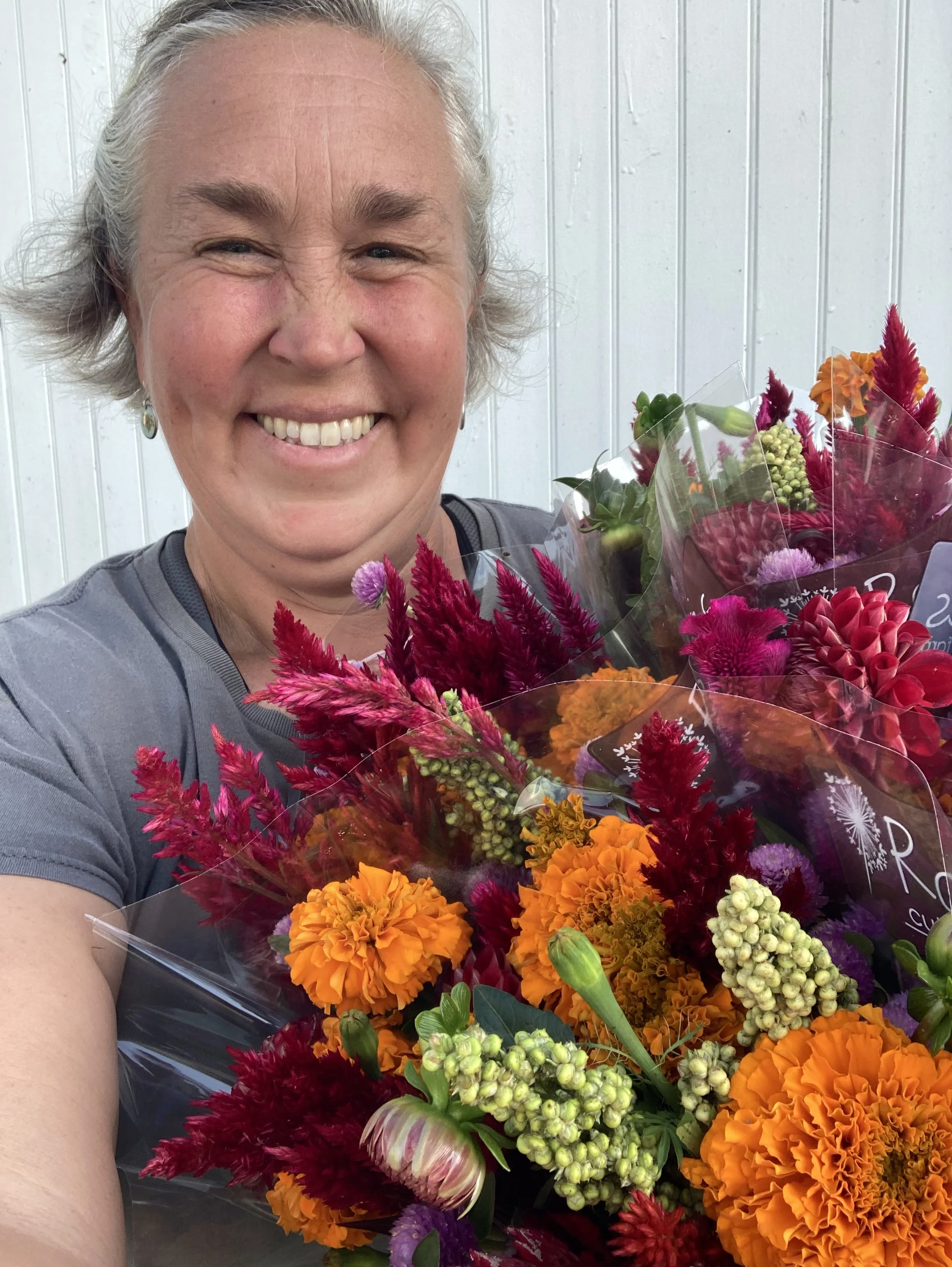
About Michelle Elston
Michelle Elston is the owner of Roots Cut Flower Farm in Pennsylvania, where she has built one of the most efficient flower farms Jenny knows. After founding Roots in 2007, Michelle grew the farm into a highly systemized cut flower business that now produces around 28,000 to 30,000 supermarket bouquets each year, while also serving retail customers and seasonal flower lovers.
What makes Michelle stand apart is her rare combination of farmer practicality, business discipline, and deep respect for quality of life. She has spent nearly two decades refining the tiny details that make a flower farm run better, from crew training and labor tracking to bouquet production, harvest systems, and values-based decision-making. Her farm is proof that sustainable growth does not come from doing everything for everyone. It comes from clear systems, smart boundaries, and knowing exactly what helps the business stay profitable without burning out the farmer behind it.
Join the ASCFG: www.ascfg.org
Follow Michelle on Instagram: @rootsflowerfarm
Check out her Website: www.rootsflowerfarm.com
That kind of training takes time at first, but it saves time later.Try breaking tasks down into tiny movements: where your hands go, how you hold the stem, where the compost bucket sits, how to strip leaves without wasting motion. On a high-volume flower farm, those little movements add up fast. Teaching someone well means they can eventually do the work confidently, sometimes even faster than you can. And that is the whole point.
If your farm can only function when you personally do every important task, your business has a ceiling.
Profitable Flower Farming Requires the Right Infrastructure at the Right Time
Remember, infrastructure does not have to happen all at once.
Not every farm starts with a perfect barn, a brand-new walk-in cooler, heated greenhouse space, or rolling racks gliding effortlessly across smooth concrete. Sometimes you use what works, build profit first, and invest when the upgrade will truly save time, protect your body, or make the business more efficient. The key is knowing which frustrations are costing you money, which ones are costing you energy, and which ones are simply part of the season you are in.
Learn From Other Flower Farmers Before You Reinvent Everything
Michelle’s final reminder is one every grower needs to hear: get off your own farm.
Visit other farms. Join organizations like the Association of Specialty Cut Flower Growers. Learn from people who are doing the work in real life, not just in theory. Sometimes the thing that changes your business is not the big workshop topic you expected. Sometimes it is a tiny detail, like a cart placement, a harvest tool, a pathway through the field, or the way another farm organizes its crew schedule.
This episode is full of those practical, grounded ideas that help flower farmers grow a more efficient, profitable, and sustainable farm business without burning themselves out.