How We Structure Our Flower CSA For Profit and Retention
A cut flower CSA can be one of the most predictable, steady, and profitable parts of a flower farm business. It can also become one of the most complicated if it is built around too many options, unclear dates, scattered pickup locations, or bouquets that take more labor than they are worth.
The best cut flower subscription is not always the one that runs every single week of the season. Sometimes the stronger business move is to build your subscription around the natural rhythm of your farm, the crops your customers already love, and the weeks when you know you will have enough flowers to deliver something beautiful without sending yourself into a panic.
Build Your Cut Flower CSA Around Peak Production
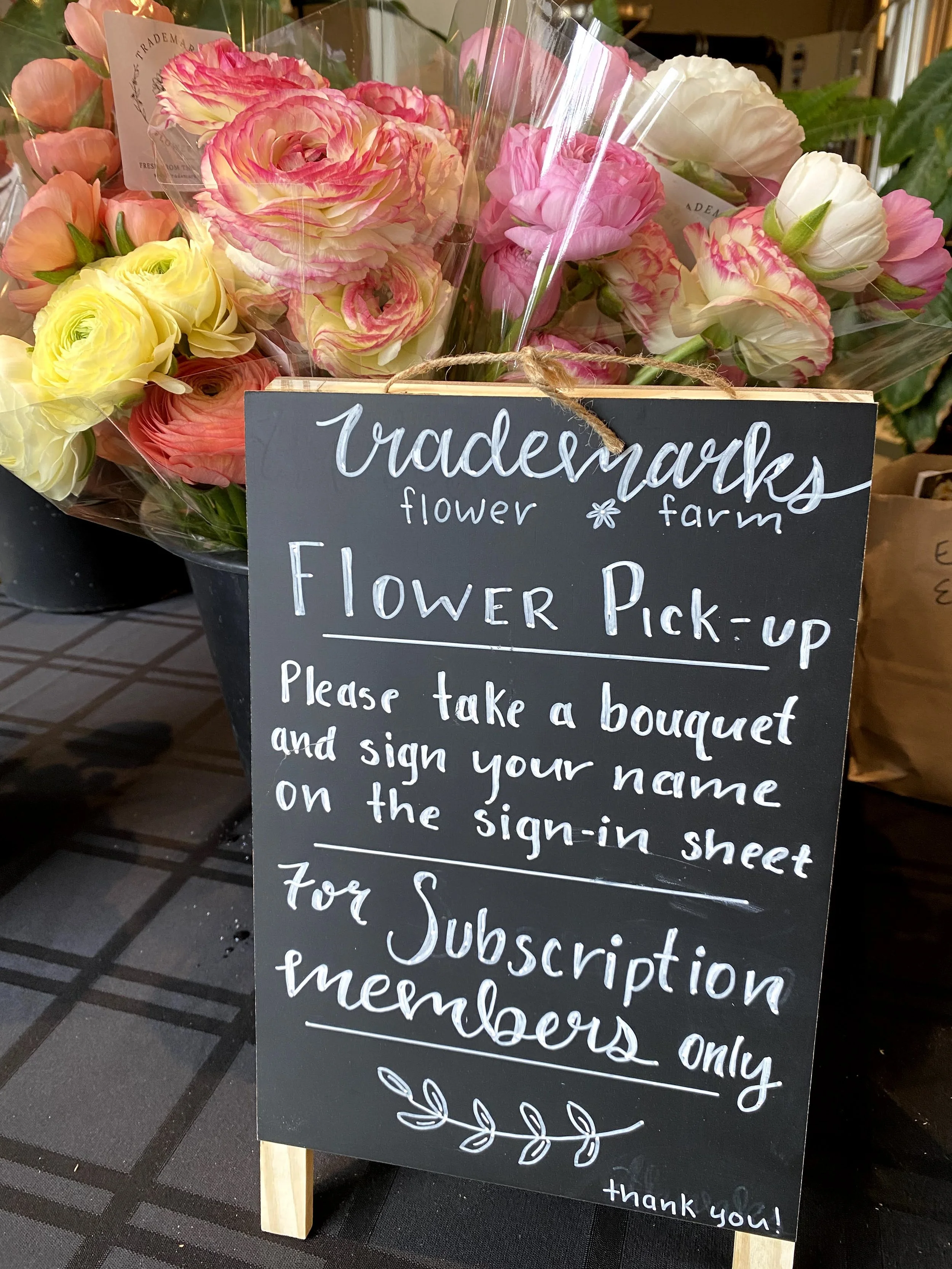
At Trademarks Flower Farm, the flower subscription is structured around peak production months instead of forcing the farm to provide the same exact product all season long. May is focused on ranunculus, June is centered around peonies, August brings in simple mixed bouquets, and September is all about dahlias.
Each month gives customers something clear, seasonal, and exciting to look forward to.
This kind of cut flower CSA structure helps the farm work with production instead of against it. If July is naturally slower because spring flowers are fading and summer flowers have not fully hit their stride yet, it does not always make sense to force a monthly subscription during that gap. Sometimes the most profitable decision is NOT adding more onto your plate.
Keep Your CSA Simple and Easy to Understand
One of the biggest lessons from running a profitable cut flower subscription is that clarity matters. Customers should know exactly what they are buying, when they are picking it up, what flowers they can expect, and how the whole process works before they ever click purchase. Clear dates, clear pickup instructions, and a clear product make the entire experience easier for everyone.
Standardizing the program also makes it easier to manage behind the scenes. Instead of changing prices every month based on flower value or trying to explain why dahlias cost more than zinnias, each month can have the same price point with the product built to match that value. That simple decision removes customer confusion, reduces questions, and makes the cut flower CSA easier to sell.
Straight Bunches Can Make a Subscription More Profitable
Mixed bouquets are beautiful, and customers love them, but they are not always the most efficient choice for a cut flower subscription. Straight bunches of premium flowers like ranunculus, peonies, and dahlias can be faster to harvest, faster to bunch, faster to process, and easier for the team to execute consistently.
Efficiency matters. When flowers can be cut and bunched in the field, then brought into the studio and quickly sleeved for pickup, the whole cut flower CSA becomes more profitable. The customer still receives a premium, abundant product, but the farm is not spending hours designing complicated mixed bouquets every week unless the price point truly supports that labor.
ickup Locations Can Make or Break Your CSA Systems
Pickup locations sound simple until you are driving all over town dropping off flowers for just a handful of customers at each stop. Over time, consolidating pickup locations can make a cut flower CSA far more efficient. Fewer stops mean less driving, less labor, fewer mistakes, and a smoother system for the farm team.
A strong pickup location should be convenient for customers, easy to access, and ideally already part of their normal routine. Partnering with another local business can be a win for both sides, especially if your flowers bring steady foot traffic into their space on a slower day of the week. The goal is not just more locations. The goal is better locations.
Customer Retention Starts With Clarity and Connection
A profitable cut flower subscription is not only about selling shares once. It’s about creating an experience that makes customers want to come back year after year. That starts with making the program easy to understand, but it continues through thoughtful communication during the season.
Weekly emails can remind customers when their flowers are ready, tell them what they are receiving, share a quick story from the farm, and give them tips for making their flowers last longer. Those little touchpoints help people feel connected to the farm, the flowers, and the people behind them. That connection is what turns a cut flower CSA from a simple pickup into something customers look forward to every week.
Price Your Cut Flower CSA for Value, Not Just Discounts
A cut flower CSA does not have to be heavily discounted to be appealing. Instead of training customers to look for the cheapest option, focus on creating a product that feels elevated, generous, and special. Bigger bunches, premium stems, beautiful wrapping, and flowers reserved just for subscription customers can make the experience feel worth every penny.
When a cut flower subscription is priced intentionally, it gives the farm predictability, better cash flow, and a clearer plan for harvest and crop planning. The real goal is not to copy someone else’s CSA structure exactly. It is to build a system that supports your customers and your farm business at the same time. For the full breakdown of how we structure our flower CSA for profit and retention at Trademarks Flower Farm, listen to Episode 106 of the Six Figure Flower Farming Podcast.