As the 2026 flower farming season comes to an end, it's time to take a good, hard look at what actually worked on our farm this year. And let me tell you, there were a few surprises! After years of building our one-acre cut flower farm into a profitable, multiple six-figure business, I've learned that growing a successful flower farm isn't always about growing more flowers, finding new customers, or adding more to your plate. Sometimes, the biggest improvements come from getting better at what you're already doing. Every year, I use a simple exercise called Start, Stop, Continue to evaluate our crops, sales outlets, and farm operations. It's helped us make smarter business decisions, simplify our systems, and build a flower farm that's not just profitable, but actually enjoyable to run.
Reviewing Our Flower Farm Sales: What the Numbers Tell Us
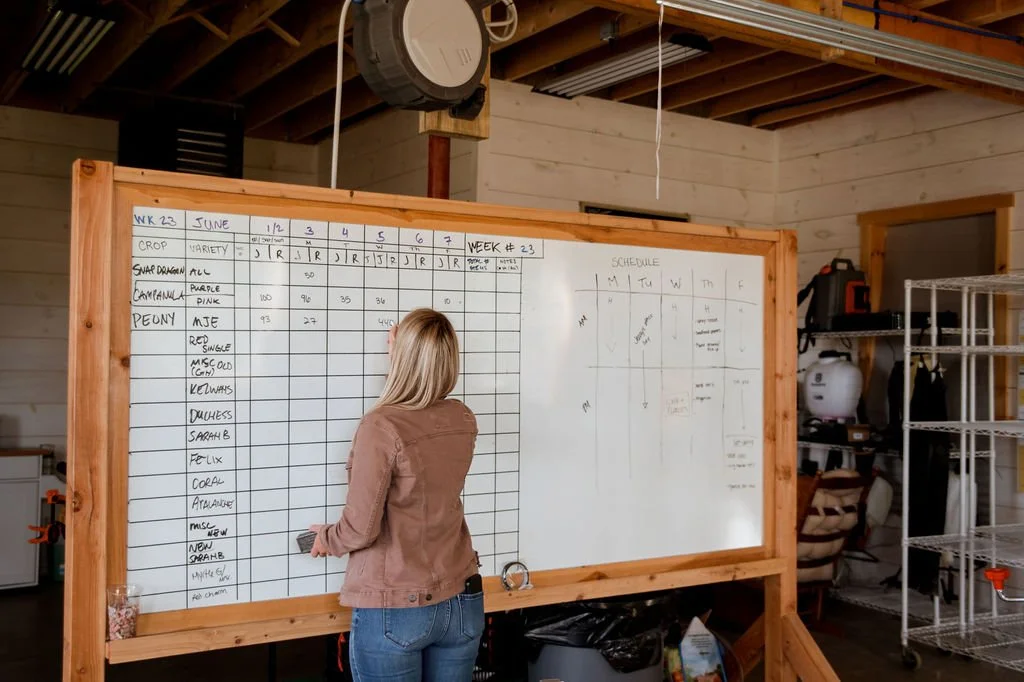
One of the biggest surprises from our 2026 growing season was our farmers market sales. They were down significantly, making this one of our worst years at that particular market. I have a few theories about why, including a temporary market relocation and changing consumer spending habits, but I don't have the data to say for sure. Meanwhile, our bulk flower bucket revenue increased by more than 250%, with virtually no marketing! It's a pretty interesting contrast, isn't it? One sales outlet was struggling while another was practically growing on its own. It's a reminder that declining sales in one area don't necessarily mean demand for your flowers is disappearing. Sometimes, customers are simply changing how they want to buy them.
When evaluating your flower farm's profitability, it's important to look beyond your total revenue and consider how each sales outlet is performing. Ask yourself:
Where is demand already strong? Are customers actively seeking out certain products or services?
Which sales outlets have the best profit margins? Consider the labor, materials, and time required to make each sale.
Where are you working hardest to make sales? Are you constantly convincing customers to buy, or are they already coming to you?
What We're Starting in 2027: Growing More of What's Profitable
Our biggest opportunity for 2027 is pretty obvious: we're going to start intentionally marketing our bulk flower buckets. They're one of our highest-margin products because there's very little additional labor involved. We harvest the flowers, put them in buckets, and customers pick them up. No elaborate bouquet design, no delivery, and no complicated logistics. We're also making some adjustments to our crop planning based on what customers actually purchased this year. Pink and purple flowers consistently sold out, particularly our zinnias and ranunculus, while we had more oranges and yellows left over. Sometimes, our customers tell us exactly what they want, and we just need to listen!
A few other changes we're making to increase flower production and improve efficiency include:
Growing more lisianthus and dahlias: We're bringing back a second succession of lisianthus for September and increasing dahlia production to meet consistent demand.
Delegating irrigation management: We're creating a more structured system with clear responsibilities so I don't have to personally manage our seven irrigation zones.
Protecting personal time: I'm being more intentional about scheduling vacations, taking breaks, and setting boundaries between work and family life.
What We're Stopping: Simplifying Our Flower Farm Crop Plan
Now, here's something I think flower farmers struggle with: knowing when to stop doing something. It's really easy to dream up new crops, sales opportunities, and projects. But if you keep adding things without eliminating anything, eventually you're going to run out of time, money, or space. This year, we're cutting summer marigolds because we simply weren't using enough of them to justify the growing space. We're also eliminating some specialty dahlia varieties. They're absolutely beautiful, but they aren't necessarily the most productive or practical varieties for our mixed bouquets, CSA subscriptions, and farmers market customers. Just because a flower is valuable or popular doesn't mean it's the right crop for your business.
We're also eliminating our free CSA farm tours, which have had disappointing attendance the past couple of years, and taking a hard look at whether coral celosia deserves a place in our crop plan. It's a gorgeous flower, but between spider mite management, support netting, and stems going to seed before harvest, it's requiring quite a bit of attention. These are the kinds of decisions that can make a huge difference in your farm's efficiency. A crop might technically generate revenue, but could something else make better use of that growing space with less labor?
What We're Continuing: Building a More Efficient Flower Farm Business
Of course, not everything needs to change! We're continuing with our core sales outlets, including our flower CSA, farmers market, bulk buckets, and dahlia tuber sales. Even though our farmers market had a difficult year, it still accounts for roughly 40% of our revenue. We're not going to abandon an important part of our business because of one disappointing season. We're also continuing to delegate more responsibilities to our team, including farmers market planning, bouquet recipes, harvest lists, and customer communication. These systems have made an enormous difference in how much time and mental energy I spend managing the day-to-day details of the farm.
We're also sticking with our simplified crop planning strategy, which focuses on a smaller number of high-performing flowers throughout the season. Rather than trying to grow a little bit of everything all summer, we build our production around key seasonal crops:
Spring: Ranunculus and peonies
Summer: Sunflowers and lisianthus
Fall: Dahlias, eucalyptus, and heirloom mums
This approach allows us to grow larger quantities of fewer crops, streamline production, and build beautiful bouquets around flowers our customers already love.
How to Plan a More Profitable Flower Farming Season in 2027
Before you start ordering seeds, planning your growing beds, or dreaming up a dozen new projects for next season, I want to encourage you to try the Start, Stop, Continue exercise for your own flower farm. Look at your sales records, crop performance, labor requirements, and the parts of your business that felt especially frustrating this year. What sold out? What barely got harvested? Which sales outlets were easiest to manage? What tasks consumed your time or mental energy? And maybe most importantly, did your business actually support the life you want to live?
Building a profitable and sustainable flower farm doesn't mean constantly reinventing your business. After years of refining our systems, my Start, Stop, Continue lists are getting shorter, and that's a good thing! We're making smaller, more intentional adjustments instead of overhauling everything each season. The goal isn't simply to make more money. It's to build a business that's profitable, efficient, and sustainable for the person running it.
Want a closer look at the decisions we're making on our farm for 2027? Tune in to Episode 129 of the Six Figure Flower Farming Podcast, What Worked, What Didn't, and What We're Changing on Our Flower Farm in 2027, for a behind-the-scenes look at our season and practical ideas you can use to make your own flower farm more profitable next year.