Flower Farm Pest Management: How to Protect Your Crops, Reduce Losses, and Increase Profits
If you've been growing flowers for any length of time, you know that sinking feeling when you walk into your high tunnel and discover aphids covering your plants, powdery mildew spreading across your zinnias, or an entire planting of lisianthus suddenly wilting. You've already invested in the seeds, plugs, fertilizer, labor, and growing space. Now, all that time and money is at risk. Pests and diseases are an inevitable part of flower farming, but losing your profits to them doesn't have to be. The goal isn't to grow a flower farm that's completely pest-free. That's just not realistic! The goal is to build a pest and disease management system that helps you catch problems early, prevent recurring issues, and protect your investment.
Stop Reacting to Pests and Start Scouting Your Farm
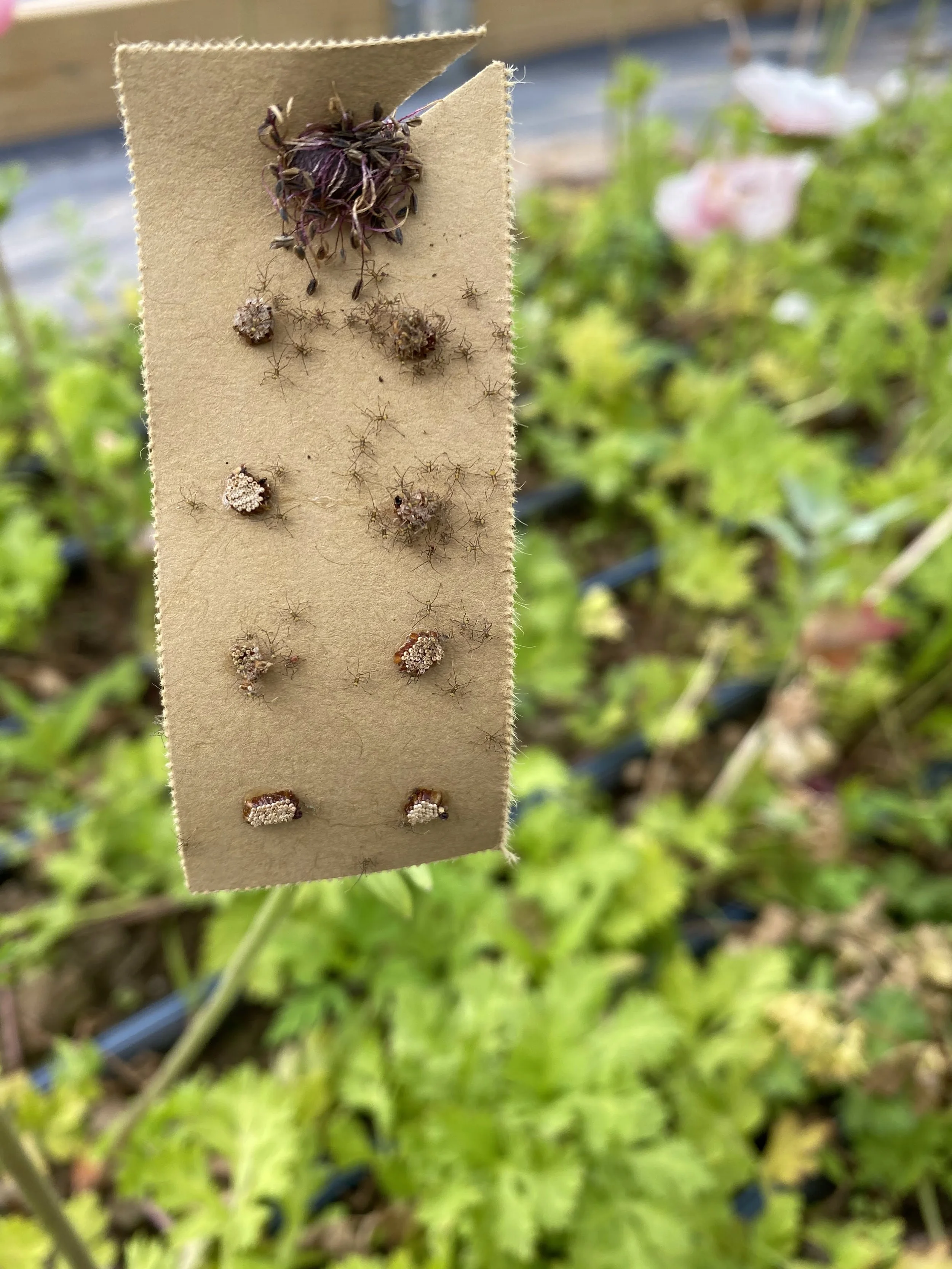
One of the biggest mistakes I see flower farmers make is waiting until a pest or disease problem becomes obvious before doing something about it. By the time you notice aphids covering your flower buds or spider mites damaging your foliage, you're already behind. Regular pest scouting is one of the simplest and most effective ways to protect your flower crops. For years, I set aside Monday evenings to walk around my farm, inspect my plants, and look for anything unusual. It was actually one of my favorite parts of the week because I could focus on what was happening in the field without a hundred other things demanding my attention.
You don't need expensive equipment or a complicated system to get started. Set aside at least 30 minutes each week to inspect your growing areas, paying particular attention to:
Leaves, stems, and flower buds: Look for discoloration, distorted growth, holes, unusual spots, or visible insects.
Sticky traps: Yellow traps can help monitor flying pests like whiteflies, fungus gnats, and thrips, while blue traps are particularly useful for thrips.
A magnifying hand lens: An inexpensive 10x lens makes identifying tiny pests, including mites and aphids, much easier.
Your scouting records: Write down what you find, where you find it, and when. These notes will become incredibly valuable over time.
Learn Your Farm's Pest and Disease Patterns to Prevent Crop Losses
Here's something I've learned after more than a decade of commercial flower farming: many pest and disease problems are surprisingly predictable. On my farm, Japanese beetles typically show up around the first week of July. Aphids are a recurring problem in our high tunnels during March and April, and spider mites tend to appear when the tunnels become hot and dry in midsummer. Once you recognize these patterns, you can stop being surprised by the same problems every season and start preparing for them before they happen.
Prevention doesn't always mean spraying something. Sometimes it's improving airflow, adjusting irrigation, managing weeds, or using biological products to protect a vulnerable crop. We used to lose a significant portion of our lisianthus to Fusarium, which was incredibly frustrating considering how expensive those plugs are! After researching the problem, we started using preventative biological treatments on our plugs before transplanting. Our losses dropped dramatically. That's the financial impact of a good prevention system: fewer lost plants, better yields, and more flowers available to sell.
Build an Integrated Pest Management System That Works for Your Farm
One of the most valuable approaches to commercial flower farm pest control is integrated pest management (IPM). Instead of reaching for the same treatment every time something goes wrong, IPM combines prevention, monitoring, accurate pest identification, and appropriate control methods. And here's the thing: not every pest problem requires treatment! Finding a handful of aphids doesn't necessarily mean you need to spray your entire high tunnel. Sometimes the best decision is simply to keep monitoring, especially if beneficial insects are already doing their job.
A successful flower farm pest management strategy should include several important practices:
Identify the problem correctly. Use reliable university extension resources, such as the New England Greenhouse Floriculture Guide, to understand what you're dealing with before spending money on treatments.
Focus on prevention. Healthy growing conditions, proper spacing, clean production areas, and crop-specific preventative measures can reduce problems before they become expensive.
Use beneficial insects strategically. Biological controls can be incredibly effective, but you need the correct beneficial species, appropriate timing, and an understanding of which pests they target.
Make informed treatment decisions. Whether you're using organic or conventional products, always read the label, follow safety requirements, and understand how treatments interact with your other pest management practices.
Evaluate your results. After treating a problem, scout again to determine whether the treatment actually worked instead of continuing to spend money on something ineffective.
Protect Your Flower Farm's Profitability With Better Pest Management
Every pest management decision has a cost. Beneficial insects cost money. Treatments cost money. Your time costs money. And losing an entire crop because you didn't address a problem early enough? That can be incredibly expensive. But successful pest management isn't about throwing every possible solution at a problem. It's about making informed decisions that balance crop health, environmental responsibility, and your farm's profitability. You don't need to become an entomologist or plant pathologist to run a successful flower farm. You just need to know how to identify problems, where to find reliable information, and how to build systems that work for your particular farm.
If there's one thing I'd encourage you to do this week, it's to put a recurring scouting appointment on your calendar. Seriously, just 30 minutes a week is a great place to start! Pay attention to what's happening in your growing areas, keep simple records, and start recognizing patterns. Over time, you'll develop the knowledge and confidence to handle problems before they turn into expensive disasters. For a deeper dive into flower farm pest and disease management, beneficial insects, preventative treatments, and the lessons I've learned through years of trial and error, listen to Episode 128 of the Six Figure Flower Farming Podcast!