How This Farmer Raised Prices By 30% - With ZERO Pushback (With Lydia Of Henhill Cut Flowers)
There is a point a lot of flower farmers hit where the flowers are beautiful, the field is full, and somehow the bank account still does not match the amount of work going into the business.
That was exactly where Lydia Watson of Henhill Cut Flowers found herself. She was growing gorgeous seasonal flowers in the south of England, selling primarily to wedding and event florists, and working on an incredibly small piece of land. But behind the scenes, the business felt chaotic. Her pricing was based largely on guesswork, her finances were mixed into her personal accounts, and she was spending so much time on the farm that the business had started swallowing the rest of her life.
The biggest shift came when she stopped thinking only like a grower and started thinking like a business owner.
Flower Farm Pricing Gets Easier When You Know Your Numbers
This year, Lydia raised her flower prices by 30%.
And she got zero pushback.
That kind of price increase can feel terrifying when you are selling cut flowers, especially when you are comparing yourself to wholesalers, imported flowers, or other growers whose actual numbers you do not know. Before Lydia started tracking her real costs, she admits that she was essentially making up her prices.
She knew what other flowers were selling for, but she did not know what her flowers actually needed to sell for in order for the business to work.
Once she understood her direct costs, overhead, labor, and break-even pricing, everything changed.
She could look at the numbers in black and white and say, “This is what I need to charge.” That gave her the confidence to stop discounting, stop second-guessing herself, and stand behind the value of the product she was growing.
Flower Farm Record Keeping Can Change the Way You Make Decisions
Lydia has always liked data, but there is a big difference between liking spreadsheets and actually collecting the right numbers from your farm.
Now she tracks labor, crop expenses, harvest time, and production data for every crop she grows. If she touches a crop, she records what she did and how long it took. She keeps simple notebooks for seed starting, field labor, and harvesting, then transfers that information into spreadsheets later in the season.
And honestly, I love that part of her system because it does not have to be fancy.
We have tried bringing technology into the field too, and sometimes an old-fashioned notebook and pen just works better. Your hands are dirty. It is raining. Your battery is dead.
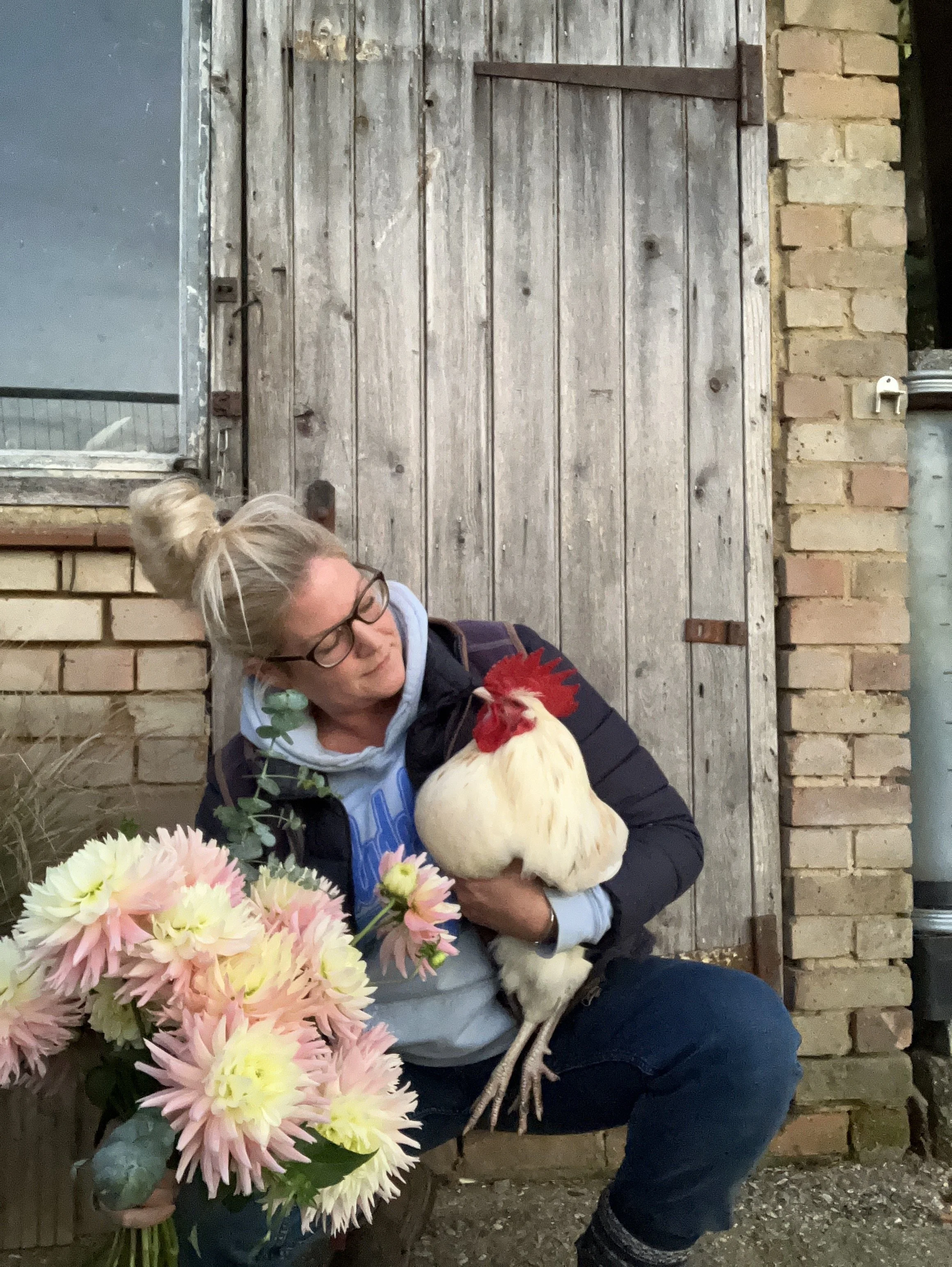
Meet Lydia Watson of Henhill Cut Flowers
Lydia Watson is the grower behind Henhill Cut Flowers, a small-scale flower farm in the south of England where she grows chemical-free, seasonal cut flowers for local wedding and event florists. Working on a challenging off-grid site with sloping, chalky soil, Lydia has built a business around making the most of limited space while producing distinctive, naturally shaped flowers that florists love.
What really makes Lydia stand out is the way she approaches flower farming as both a grower and a business owner. After focusing more intentionally on profitability, pricing, efficiency, and record keeping, she raised her prices by 30% with zero customer pushback and moved her farm into profitability. She is constantly tracking data, evaluating what earns its place in the field, and finding smarter ways to use her time and every square meter she has available.
Lydia is also the host of the Becoming a Cut Flower Grower podcast, where she shares an honest, real-time look at building a cut flower business, including the successes, mistakes, muddy field days, and occasional chicken interruptions along the way.
Follow Lydia on Instagram:@henhillcutflowers
Check out her website:www.henhillcutflowers.co.uk
The important thing is not whether your system is impressive. The important thing is whether you actually use it.
Those records give Lydia something far more valuable than a tidy spreadsheet. They give her the information she needs to decide what deserves space on her farm next year, where labor is eating into profitability, and which crops are actually worth growing.
Better Time Management Makes a Small Flower Farm More Efficient
One of the other big changes Lydia made was learning to batch tasks and time block her work.
Before, she would walk onto the field planning to weed one bed, notice something that needed tying, go find string, spot something else that needed planting, and suddenly she had started six jobs without finishing any of them. I think every flower farmer knows exactly how easy that is to do.
Now she decides what she is going to accomplish before she gets to the field. She might spend 30 minutes on one task, an hour on another, or two hours focused on a single crop. That focus has made her more efficient, but it has also made her record keeping more accurate because she actually knows how much time she spent on each job.
For a small-scale flower farm, that matters enormously. When you are growing on limited land, you cannot afford to waste space, labor, or time.
Every square meter has to work harder for you.
Running a Profitable Flower Farm Means Treating It Like a Business
Lydia describes this shift as stepping into a “CEO mindset,” and I think that is one of the most important lessons from her story.
Your flower farm is not just an extension of you. It is a business.
It needs its own bank account, its own systems, its own goals, and eventually, sometimes, its own team.
Lydia separated her personal and business finances, started using Profit First principles, and created separate savings “pots” for things like expenses, future purchases, and profit. Instead of looking at the balance in her bank account and assuming all of that money was available to spend, she started telling her money where it needed to go.
That shift helped her become profitable this year.
It also gave her enough confidence to hire someone when a large order came in and she could not personally be there to handle it. A year earlier, she never would have believed the business could afford to pay someone else. Now she can make that decision based on what the business needs.
Sustainable Flower Farm Growth Is Not About Doing Everything Yourself
Marketing has also been a challenge for Lydia, and I appreciated how candid she was about that.
She has had some great wins, including inviting local buyers onto the farm, building relationships with florists, connecting with caterers and cake makers, and interviewing one of her biggest florist customers on her own podcast. That interview gave both Lydia and the florist something valuable to share with their audiences, while also helping Lydia build credibility with other potential buyers.
But she also realized that marketing was becoming a bottleneck.
So she made another CEO decision. She decided to outsource some of it.
There is no prize for doing every part of your flower farm business alone. As your business grows, your job is to figure out where your time matters most, what is holding you back, and when it makes more sense to bring someone else in.
You Do Not Need a Huge Farm to Build a Profitable Flower Business
Lydia is growing on roughly one eighth of an acre under cultivation. Her field is off-grid. She has no water or electricity on site. The ground is sloped and chalky. She started on a shoestring budget.
And she is profitable.
That does not mean everything is easy. She still loses crops. Rats ate nearly an entire tulip crop this year. She still has things she wants to improve. But the business is no longer running on chaos and hope.
She knows her numbers. She knows what her flowers need to sell for. She knows how long crops take to grow and harvest. She knows where her money is going. And most importantly, she has the confidence to make decisions based on data instead of fear.
If you are growing beautiful flowers but still feel unsure about pricing, profitability, marketing, or where all your time is going, listen to my full conversation with Lydia on the Six Figure Flower Farming Podcast. Her story is such a good reminder that you do not need to grow more or work more hours to build a better flower farm business. Sometimes the biggest shift starts with learning to run the farm you already have more intentionally.