Starting Over On A Flower Farm And Alternative Income From Content With Sarah Gray From Bloom + Gray
Build the Flower Farm You Need Right Now
Starting a flower farm from scratch can feel like standing at the edge of a wide, empty field with a very long shopping list. Beds, fencing, irrigation, tunnels, tools, seed-starting supplies, compost, equipment. It is easy to convince yourself that you need all of it before you can grow a single profitable stem.
But Sarah Gray of Bloom + Gray is proving that experience often teaches you to do less, not more. After nearly a decade of flower farming, she is starting again in a brand-new field and focusing first on the bare essentials: securing the space from rabbits and hares, putting up a polytunnel, preparing productive beds, and growing annuals from seed. Her goal is not to build the fanciest farm. It is to create an efficient flower farm that can produce well without burying the business under unnecessary startup costs.
Choose Practical Growing Methods Over Perfect Ones
There is always an ideal version of how we think a flower farm should be built. Maybe every bed is no-dig, every input is produced on-site, and the soil preparation happens months before planting. Then spring arrives, the field is soaked, the season is already moving, and you simply need to get crops into the ground.
Sarah has used no-dig methods in the past, but she is taking a more flexible approach on her new farm. Concerns about expensive, inconsistent bulk compost led her to remove turf in some areas, tarp other sections, cultivate the soil, and plan for mulches and cover crops to keep weeds under control. It is a good reminder that regenerative flower farming does not require being dogmatic. The best method is the one that protects your soil, fits your timeline, and gives your farm a real chance to succeed this season.
Use Simple Tools to Make Flower Farming More Efficient
Flower farming does not have to be highly technical, but the right tools can save an enormous amount of time and wear on your body. Sarah relies on a wheelbarrow, rake, stirrup hoe, hori hori knife, and a simple, efficient field layout. Those basic tools may not look exciting on social media, but they are often what keep the day moving when there are hundreds of seedlings waiting to be planted.
She has also switched almost entirely to soil blocking, using a heated grow tent to create more consistent germination. The soil blocks allow her to fit thousands of seedlings into a small space, reduce plastic use, encourage healthier root systems, and transplant directly into the field. Soil blocking will not be the perfect system for every farm, but Sarah’s experience shows the value of testing tools that solve a specific problem instead of buying equipment simply because another grower uses it.
Create a Flower Farm Business That Fits Your Life
One of the biggest lessons in Sarah’s story has very little to do with soil, seeds, or tools. It is the idea that there is no single correct definition of success in flower farming. Your business might support your family full time. It might provide seasonal income. It might sit alongside another job, creative project, or passion.
For Sarah, flower farming now works alongside YouTube, content creation, travel, and campervan life. That changes the crops she grows, the amount she invests, and the sales outlets she considers. Farmers markets no longer fit easily into her schedule, so she is exploring a local sales hub that may offer a simpler route to market. That is what sustainable farm business growth really looks like: making thoughtful choices based on your actual life, not copying someone else’s farm from the outside.
Starting Again Can Be a Business Advantage
When you begin again with experience behind you, you are not truly starting from zero. You already know which problems deserve attention first, which purchases can wait, and which systems never worked as well as you hoped. You can build cleaner, simpler, and more intentionally.
Listen to Episode 114 of the Six Figure Flower Farming Podcast for the full conversation with Sarah Gray of Bloom + Gray. We talk about starting a flower farm affordably, regenerative growing, compost challenges, soil blocking, efficient farm tools, alternative income streams, and creating a flower farm business that supports the life you actually want to live.
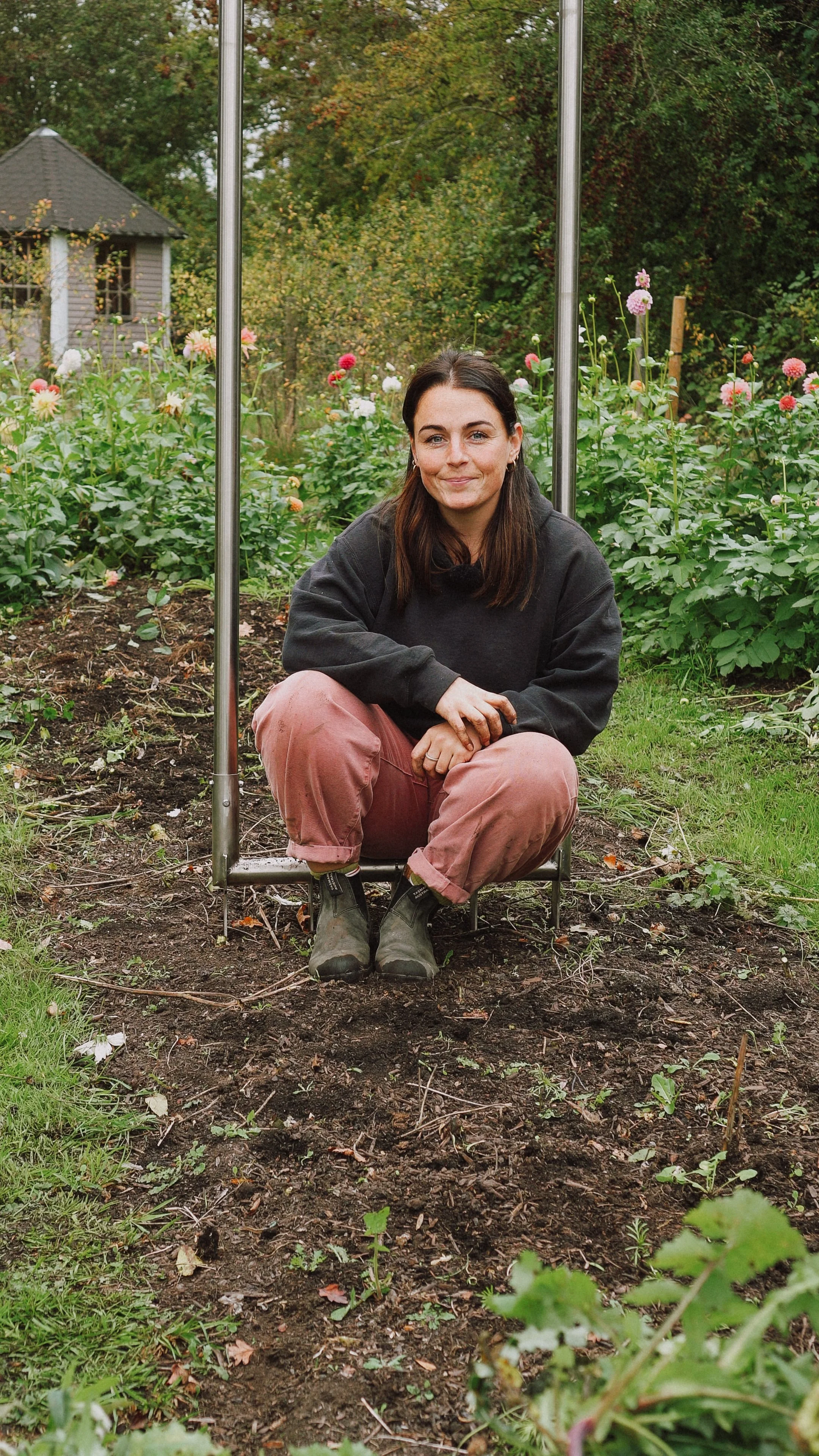
About Sarah Gray
Sarah Gray is the flower farmer, content creator, and educator behind Bloom + Gray in the UK. She began flower farming in 2017 and has spent nearly a decade growing and selling cut flowers through farmers markets, weddings, DIY flower buckets, and a roadside flower shed.
After leaving her original farm, Sarah took the rare opportunity to begin again. She now lives in a campervan and is building a new two-thirds-acre flower farm from scratch, using the lessons from her first nine years to create a simpler, more cost-effective, and regenerative growing system. Her work stands out for its honesty, experimentation, and practical approach to soil health, soil blocking, low-cost farm setup, and choosing tools that genuinely make growers’ lives easier.
Sarah also shares her knowledge through the Bloom + Gray YouTube channel, where she documents her own farm journey and visits flower farmers, market gardeners, and soil health specialists across the UK. Alongside growing flowers, she develops durable tools for small-scale growers, including UK-made stainless steel soil blockers designed to reduce plastic use and support healthier seedlings. Her ability to blend flower farming, education, travel, and thoughtful tool design makes her a truly unique voice in the industry.
Find Sara Gray Online
Follow her on Instagram: @bloomandgray
Check out her website: www.bloomandgray.co.uk